

Absence of Forfeiture Clause: Delhi HC Sets Aside Award Denying Refund of Advance
 Copy Link
 Share
Share Save
Save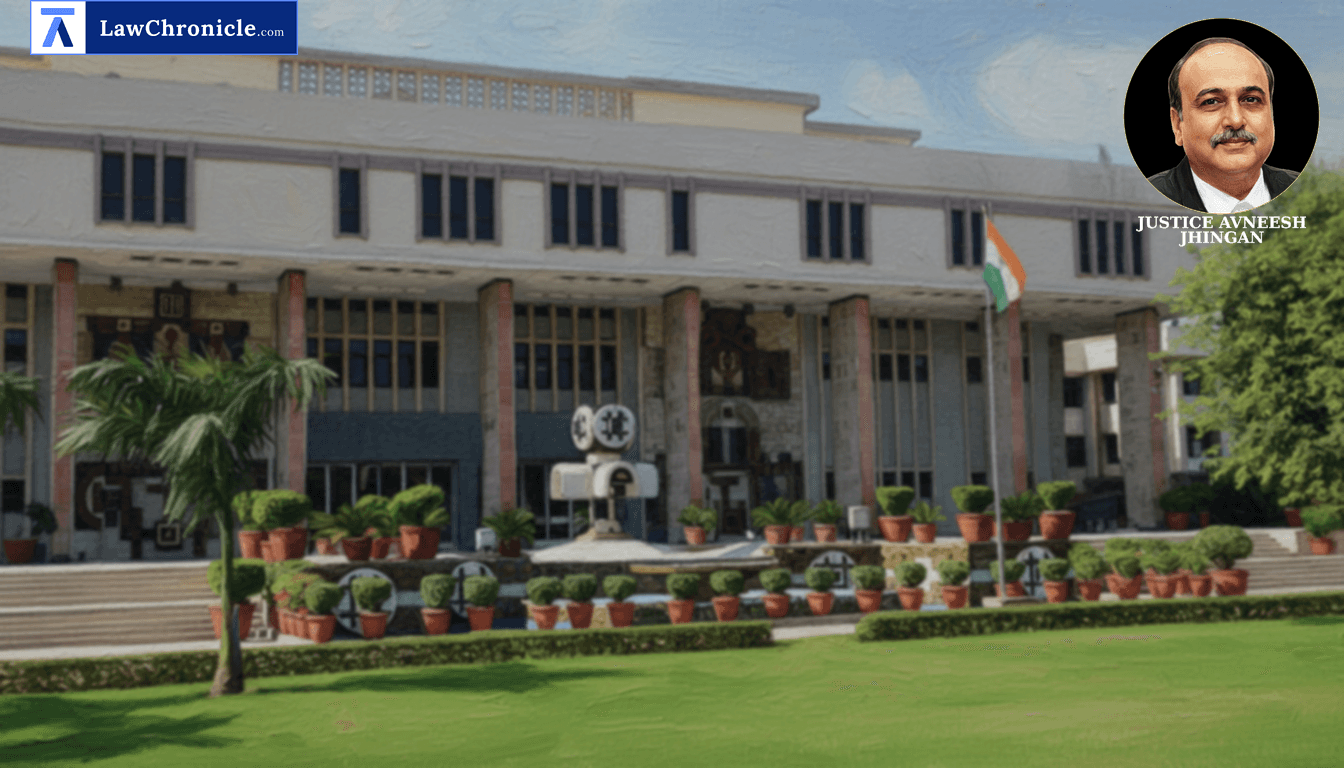
The Delhi High Court set aside an arbitral award insofar as it rejected a counterclaim seeking refund of advance payments, holding that in the absence of a forfeiture clause, retaining such amounts without proof of actual loss is legally unsustainable.
A single-judge bench of Justice Avneesh Jhingan heard the petition challenging the arbitral award. The dispute arose from a Memorandum of Understanding (MoU) for the operation of service apartments, which ultimately failed to materialize. The Court was tasked with determining whether the Arbitral Tribunal's decision to allow the respondent to retain advance fees, despite the project being a 'non-starter', was legally sound under the Arbitration and Conciliation Act, 1996 and the Indian Contract Act, 1872.
Arbitrator’s Failure to Provide Reasons Vitiates Award
The Court observed that the arbitrator’s rejection of the petitioner’s counter-claim for a refund of ₹1.18 crores was bereft of any substantial reasoning. While the arbitrator had noted that the MoU lacked a clause making payments subject to incurring expenses, the Court found this insufficient to justify the dismissal. The Court emphasized that Section 31(3) of the Arbitration and Conciliation Act, 1996 mandates a reasoned award, which is not a mere formality but a guarantee of fair consideration.
In its reasoning, the Court observed: "The issues requiring determination before the arbitrator were:- (i) whether the MoU contained clause for forfeiture of the advance amount paid; (ii) whether there is clause for refund of the amount received and most importantly (iii) whether the respondent was legally entitled to retain the advance amounts after the breach of the MoU. Rejection of the counter-claim of the petitioner is bereft of reasons. The impugned award contains no discussion or reasoning on the aforesaid aspects and is non-speaking and unreasoned."
The Court further relied on Dyna Technologies Pvt. Ltd. v. Crompton Greaves Ltd. ( "(2019) 20 SCC 1": 2019 CaseBase(SC) 2340) and Som Datt Builders Ltd. v. State of Kerala to reiterate that while arbitrators need not write elaborate judgments, the reasoning must be "intelligible and adequate."
Application of Section 73 of the Contract Act
Justice Jhingan highlighted that since the MoU did not contain a forfeiture clause, the principles of Section 73 of the Indian Contract Act, 1872 must apply. Under this statute, a party can only retain or claim damages if they prove actual loss or injury resulting from a breach. The Court noted that the respondent failed to prove that the brand name was used or that any technical support was actually rendered, as the project never commenced.
Citing the principle laid down in Central Bank of India v. Shanmugavelu ( "(2024) 6 SCC 641": 2024 CaseBase(SC) 365), the Court noted that it is inherent in a part-payment of price in advance that it should be returned to the buyer if the sale does not fructify, unless a specific forfeiture clause exists. Similarly, referencing Varkey Thomas v. G. Vijayendra Kurup, the Court noted that forfeiture is subject to reasonable compensation, which cannot be awarded in the absence of proof of legal injury.
Background:
The petitioner, a real estate developer, entered into an MoU with the respondent in 2018 to operate service apartments in a mall in Ghaziabad. The petitioner paid approximately ₹1.18 crores as advance fees for brand collaboration and technical support. Disputes arose when the respondent repeatedly demanded additional space not mentioned in the MoU, leading to a stalemate. Eventually, the petitioner sought a refund, which the respondent refused, claiming the balance of the agreed contract value.
The arbitrator rejected both the respondent's main claim and the petitioner's counter-claim. The petitioner challenged the dismissal of the counter-claim under Section 34 of the Arbitration and Conciliation Act, 1996, arguing patent illegality. The respondent, relying on Delhi Airport Metro Express (P) Ltd. v. DMRC and Reliance Infrastructure Ltd. v. State of Goa ( "2024 (1) SCC 479": 2023 CaseBase(SC) 1007), argued that the scope of interference under Section 34 is limited and that the award should not be disturbed if another view is possible. However, the High Court concluded that the dismissal of the counter-claim was in violation of public policy and Indian Contract Act, 1872. Applying the doctrine of severability as discussed in Gayatri Balasamy v. ISG Novasoft Technologies Ltd., the Court set aside only the flawed portion of the award.
Case Details:
Case No.: O.M.P. (COMM) 432/2023
Case Title: M/S SARVPRIYA SECURITIES PVT LTD v. M/S ANK HOTELS PVT LTD
Appearances:
For the Petitioner(s): Mr. Ashish Aggarwal, Mr. O.P. Faizi, Mr. Anand Aggarwal, Mr. Madhur Sapra, Ms. Nishtha Verma, Ms. Lisha Arora, Mr. Himanshu Singh, Ms. Anjali Kashyap & Ms. Ishita, Advs.
For the Respondent(s): Mr. Manu Bajaj & Ms. Parul, Advs.
Source: 2026 CaseBase(DEL) 334
 Breaking News