

Compassionate Appointment Not a Vested Right: Delhi HC Quashes Industrial Tribunal Award
 Copy Link
 Share
Share Save
Save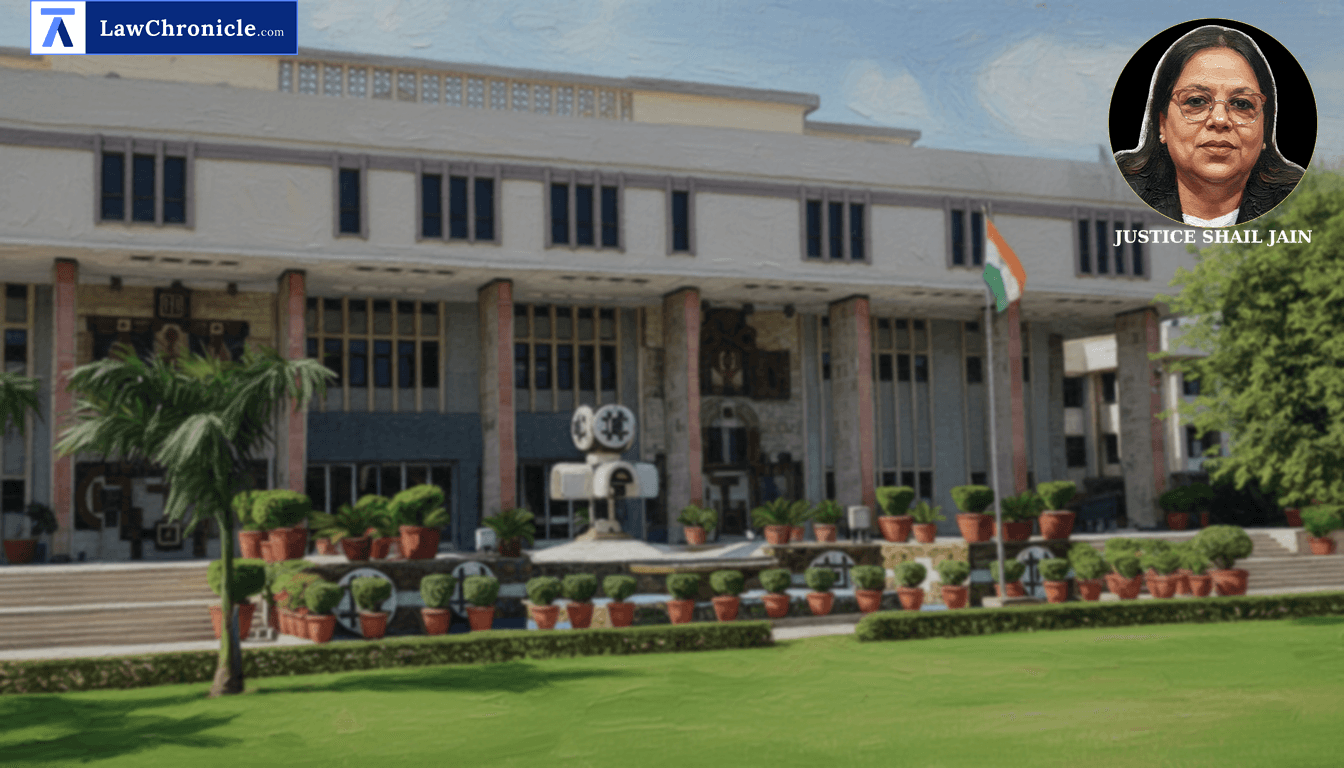
The Delhi High Court has set aside an Industrial Tribunal award that directed a DISCOM to consider a claimant for compassionate appointment several years after his father's death, reiterating that such appointments are exceptions to the normal rules governing public employment.
Justice Shail Jain, presiding over the matter, scrutinized the bounds of judicial interference in labor awards while emphasizing that the primary objective of compassionate schemes is to provide immediate succour to a family in penury, not to serve as a perpetual door for employment. The Court heard an appeal by the petitioner challenging an award that favored the son of a deceased lineman who died in 2003.
The Mandate of Immediate Financial Distress
The Court observed that compassionate appointment is a concession rather than a hereditary right. It must strictly conform to the governing scheme and is meant only to alleviate sudden financial crises. Evaluating the facts, the Court noted that the family had received substantial terminal benefits and a family pension, which mitigated the claim of 'indigence'.
The Court, in its reasoning, observed: "...compassionate appointment is not a vested or hereditary right capable of being claimed irrespective of the governing policy or lapse of time. It constitutes merely an exception to the constitutional mandate of equality in public employment under Constitution of India and Constitution of India of the Constitution of India and is intended only to alleviate the sudden financial crisis arising out of the death of an employee while in service."
Legal Precedents and the Scope of Article 226
While the Court acknowledged its supervisory role under Constitution of India of the Constitution of India, it held that findings rendered in disregard of admitted evidence or the governing scheme cannot be sustained. The Court relied on the principles laid down in Canara Bank v. Ajithkumar G.K. ( "[Civil Appeal No. 255 of 2025 arising out of SLP (Civil) No. 30532 of 2019, decided on 11th February, 2025]": 2025 CaseBase(SC) 288), which clarifies that indigence and immediate hardship are foundational requirements. It also noted the principle from Beg Raj Singh vs. State of Uttar Pradesh regarding the impact of subsequent events and lapse of time on the grant of relief.
Rationale on Delay and Eligibility
Justice Jain pointed out that the application for appointment was filed nearly six and a half years after the death of the employee, violating the two-year limit prescribed in the relevant scheme. Furthermore, the respondent had been gainfully employed in the interim, which the Court found to be a factor that "materially weakens the plea of persistent indigence."
Background:
The dispute began when the father of the respondent, a lineman with the erstwhile Delhi Vidyut Board, died due to electrocution in 2003. While the family received benefits under the Employees’ Compensation Act, 1923 and other statutory dues, the respondent applied for a job on compassionate grounds in 2010. The management rejected the request citing the lapse of time and lack of financial distress. The Industrial Tribunal, however, ruled in favor of the respondent, prompting the petitioner to move the High Court. The High Court ultimately found the Tribunal's findings to be perverse and contrary to the material on record, as the family had remained financially secure for years following the tragedy.
Case Details:
Case No.: W.P.(C) 3034/2014, CM APPL. 6342/2014
Case Title: M/S BSES YAMUNA POWER LTD. v. VINOD KUMAR
Appearances:
For the Petitioner(s): Mr. Sandeep Prabhakar, Sr. Adv. with Mr. Vikas Mehta, Advs.
For the Respondent(s): Mr. Pankaj Tripathi, Mr. Gaurav Antil, Advs.
Source: 2026 CaseBase(DEL) 338
 Breaking News