


Mere Patent Ownership Gives No Automatic Protection: Delhi HC Quashes SEP Royalty Order
 Copy Link
 Share
Share Save
Save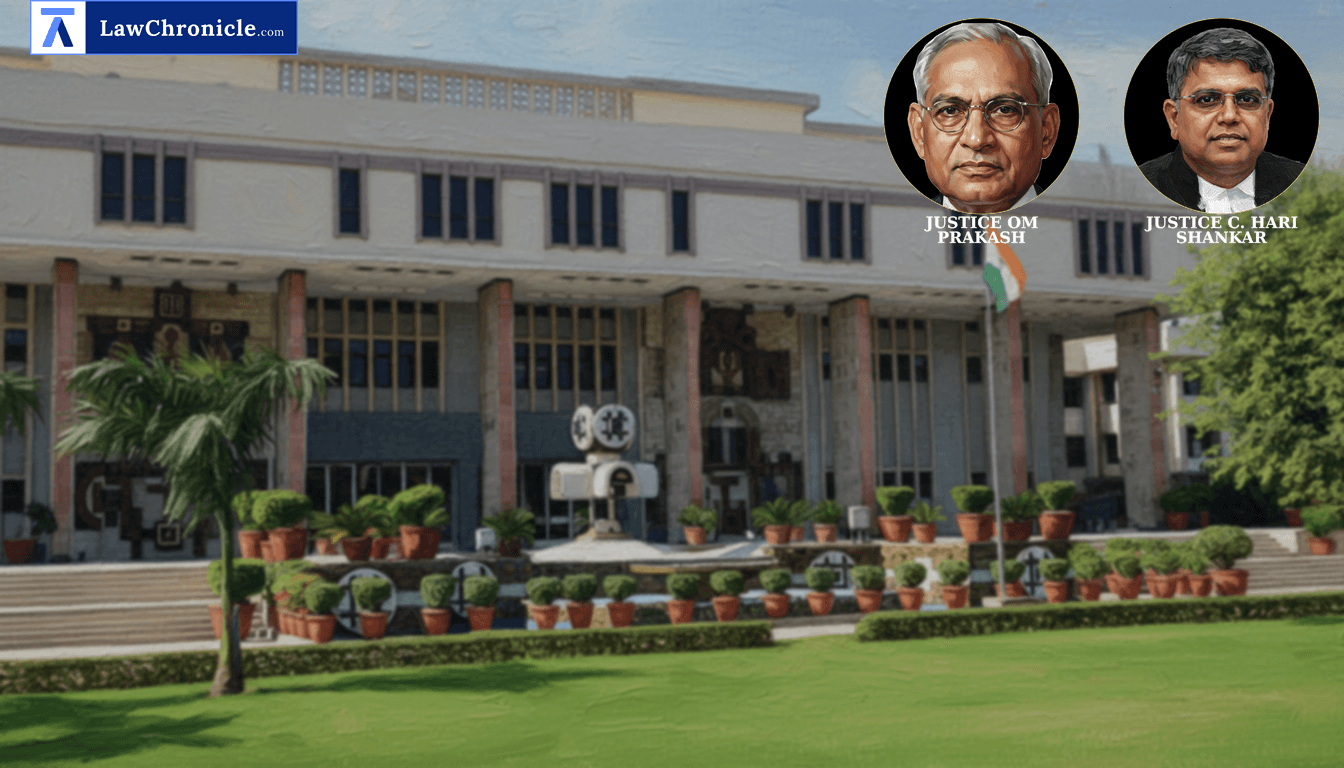
In a major development for India’s technology and patent ecosystem, the Delhi High Court has overturned an earlier ruling that required Indian manufacturers to pay substantial royalties to a global electronics company for the use of DVD technology. The Court ruled that the patent holder failed to prove that its patent was a 'Standard Essential Patent' (SEP) and that its right to exclusivity was extinguished upon the sale of components in the open market.
A Division Bench comprising Justice C. Hari Shankar and Justice Om Prakash Shukla delivered the verdict while hearing appeals against a 2018 Single Judge order. The case centered on whether Indian manufacturers were liable to pay damages for allegedly infringing a decoding device patent used in DVD players.
Failure to Prove Essentiality and Infringement
The Court noted that for a patent to be classified as an SEP, the plaintiff must establish the existence of a standard set by a Standard Setting Organization (SSO) and demonstrate that the patent is essential to operate that technology. While the Telecom Regulatory Authority Of India Act, 1997 governs patent rights, the Court emphasized that 'essentiality' requires rigorous mapping.
The Court, in its reasoning, observed: "In the absence of any credible evidence of essentiality, the suit patent cannot aspire to the status of an SEP... No claim charts, mapping the claims in US’505, EP’254 or the suit patent, onto the technical features of the standards set by the DVD Forum, were forthcoming."
Furthermore, the Court found that the 'direct test' of infringement, as established in Roche v. Cipla, was not met because no product-to-claim mapping was performed. The Court criticized the reliance on an affidavit from a witness who never entered the witness box, stating that such documents cannot be treated as evidence under the Indian Evidence Act, 1872.
The Doctrine of Patent Exhaustion
A pivotal aspect of the ruling was the application of Section 107A(b) of the Patents Act, 1970. The appellants argued that they purchased integrated circuits (chips) from authorized dealers of MediaTek, who in turn was a registered vendor for the respondent.
The Court held that once a patentee sells a product or its essential components in the market, its right to control the subsequent use or sale of those items is 'exhausted'. The Court relied on international precedents like Adams v. Burke and Quanta Computer. v. LG Electronics, Inc. to reinforce that patent rights terminate after an initial authorized sale.
Background:
The dispute began when the respondent alleged that the appellants were manufacturing DVD players using its patented 'Channel (De)coding' technology (Patent No. IN 184753) without a license. The respondent claimed the patent was an SEP and sought royalties based on FRAND (Fair, Reasonable, and Non-Discriminatory) terms. The Single Judge had previously ruled in favor of the respondent, awarding royalties of up to USD 3.175 per player.
However, the Division Bench found the Single Judge's reliance on Intex Technologies (India) Ltd v. Telefonaktiebolaget L.M. Ericsson regarding SEP protocols was misapplied to the facts. It further noted that the respondent failed to produce actual third-party license agreements to prove its rates were FRAND, despite witnesses admitting such documents existed. The Bench also held that royalty could not be charged on the entire DVD player when the patent only covered a specific decoding chip.
Case Details:
Case No.: RFA(OS)(COMM) 17/2018
Case Title: K K BANSAL v. KONINKLIJKE PHILIPS ELECTRONICS NV
Appearances:
For the Petitioner(s): Ms. Swathi Sukumar, Sr. Adv. with Mr. S. Santanam Swaminadhan, Mr. Naveen Nagarjuna, Mr. Ritik Raghuwanshi, Mr. Kartik Malhotra, Mr. Anindit Mandal and Ms. Shreya Mansi James, Advs.
For the Respondent(s): Mr. Pravin Anand, Ms. Vaishali R Mittal, Mr. Siddhant Chamola and Mr. Gursimran Singh Narula, Advs.
Source: 2026 CaseBase(DEL) 337
 Breaking News