

SC: Charges Against Director Quashed; No Proof of Day‑to‑Day Company Role
 Copy Link
 Share
Share Save
Save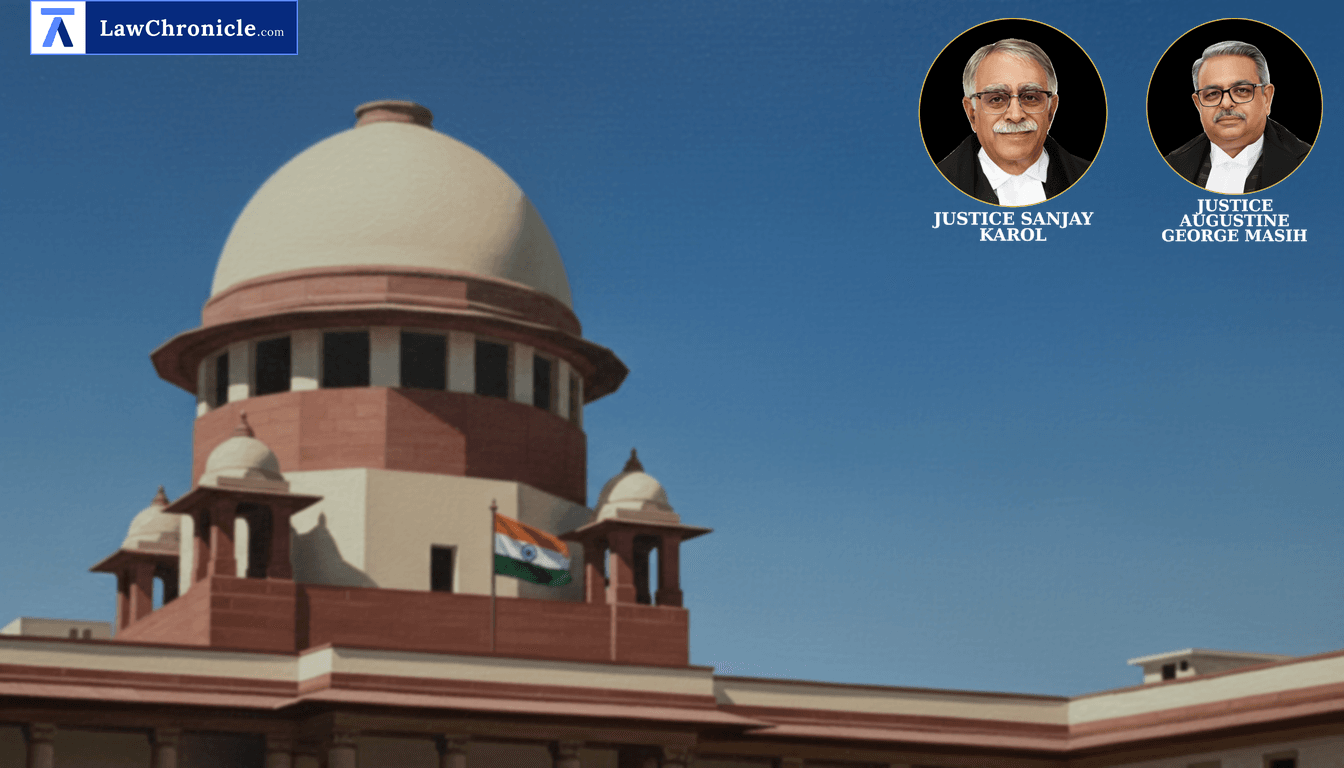
A bench of Justices Sanjay Karol and Augustine George Masih heard an appeal by Saroj Pandey challenging the Delhi High Court’s refusal to exercise its inherent powers under Section 482 CrPC to quash a summoning order in proceedings under Section 138 of the Negotiable Instruments Act, read with Section 141. The petition arose from a summons issued by the Metropolitan Magistrate in a cheque-bounce complaint and the High Court’s dismissal of a Section 482 petition after earlier revision proceedings.
The Court allowed the appeal insofar as it concerned the appellant and set aside the High Court’s order. The Supreme Court held that mere signing of board resolutions did not establish that a director was “in charge of, and responsible for the conduct of business of the company” for the purposes of Section 141 NI Act, and observed that a specific averment was required to fasten personal liability under Section 141. The Court noted that “Merely being a director of a company is not sufficient to make the person liable under Section 141 of the Act.”
The Court, in its reasoning, observed: “To say the least, the same is not inspiring in confidence because a Board Resolution is a document that is signed by the members of the Board of Directors for decisions taken or conclusions arrived at for matters placed before the Board for consideration and decision. This, however, does not in any manner mean that every member of the Board of Directors is aware of all decisions taken in the everyday transactions that are involved in running a business concern. That apart, there is not even as much as a whisper of direct allegation against the present appellant in the complaint made which, as per the judgment referred to immediately hereinabove, is the sine qua non for Section 141 N.I. Act to be attracted – ‘accused was in charge of, and responsible for the conduct of business of the company.’” The Court clarified that its observations were limited to the appellant’s case and did not affect the trial of co-accused persons.
Background
The appellant, a director of Projtech Engineering Private Limited, faced summons in a complaint alleging dishonour of three cheques dated 20 April 2021 for Rs 15 lakh, Rs 20 lakh and Rs 15 lakh issued as payment for supply of iron and steel. The cheques were returned unpaid with reasons pointing to discrepancies in signatures and alterations. Legal notices were sent in May 2021 and NI Act proceedings commenced in June 2021. The Metropolitan Magistrate issued a summons on 23 September 2021.
In revision proceedings before the Sessions Court, the appellant’s plea was rejected on the ground that her signature on board resolutions indicated involvement in day-to-day management. The Delhi High Court adopted similar reasoning and observed that once a revision petition under Section 397 had been pursued, a subsequent petition under Section 482 was circumscribed; it dismissed the Section 482 petition.
The Supreme Court examined the scope of Section 141 and relied upon precedents including S.M.S. Pharmaceuticals Ltd. v. Neeta Bhalla and subsequent authorities which required a specific averment that the accused was in charge and responsible for the conduct of the company’s business at the relevant time. The Court held that signing board resolutions, without further allegations or “unimpeachable, incontrovertible evidence,” did not justify prosecuting a director under Section 141. The Court also found the High Court’s reasoning on the limitation of Section 482 misplaced, reiterating that inherent powers under Section 482 were available despite the existence of other remedies and that the High Court had erred in law.
Resultantly, the Supreme Court quashed and set aside the proceedings against Saroj Pandey and disposed of pending applications; it allowed the appeal only to that extent and left the trial of co-accused unimpacted.
Case Details:
NeutralCitation: 2026 INSC 324
Case Title: Saroj Pandey v. Government of NCT of Delhi and Ors.
Source: 2026 CaseBase(SC) 288
 Breaking News