

SC Holds Spouse Cannot Withdraw Consent After Settlement in Mutual Divorce
 Copy Link
 Share
Share Save
Save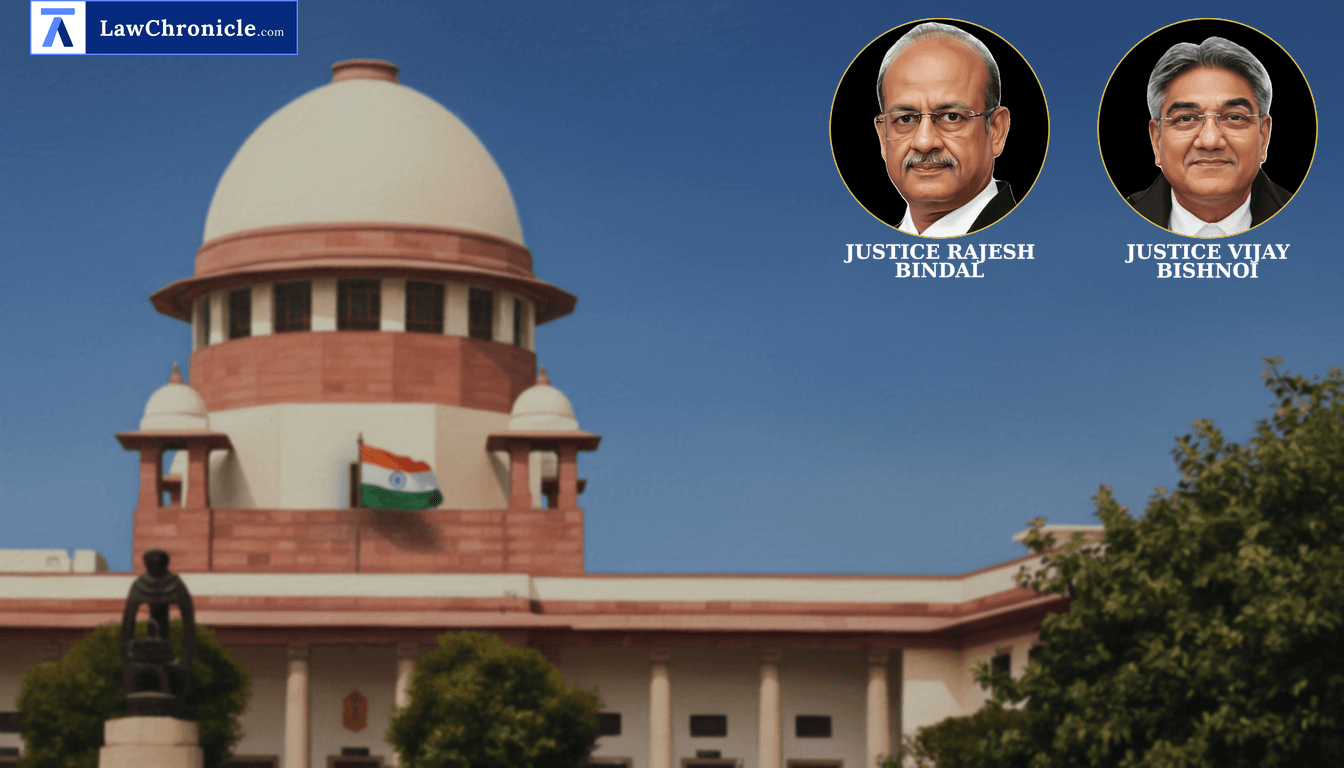
A bench of Justice Rajesh Bindal and Justice Vijay Bishnoi heard an appeal by a husband challenging a High Court order that had allowed a domestic violence complaint to proceed subject to a deposit condition; the plea also sought powers under Article 142(1) of the Constitution of India, 1950 for the grant of a decree of divorce.
Decision Summary
The Supreme Court allowed the criminal appeal, quashed the proceedings arising from DV Complaint No. 3186/2025 and exercised its powers under Article 142(1) of the Constitution of India, 1950 to dissolve the marriage, while laying down conditional directions for compliance with the Settlement Agreement. The Court noted that a mediated settlement, if performed in part by one party and resiled from by the other, could amount to abuse of process and may justify quashing of subsequent criminal proceedings.
The Court, in its reasoning, observed: "The exception to the above rule is that a party can resile from the Settlement Agreement arrived in the mediation proceedings is, if it successfully demonstrates that the said Settlement Agreement was procured by force, fraud or undue influence. The party can also resile from the Settlement Agreement on account of non fulfilment of any of the conditions by the opposite party as set out in the Settlement Agreement."
The Court expressly relied on precedent to frame its approach: it said that Ruchi Agarwal v. Amit Kumar Agarwal and others supported quashing of proceedings that amounted to abuse of process, Trisha Singh v. Anurag Kumar (2024 CaseBase(SC) 122) and Anurag Vijaykumar Goel v. State of Maharashtra ( 2025 CaseBase(SC) 641) illustrated circumstances where this Court granted divorce under Article 142(1), Gimpex Private Limited v. Manoj Goel emphasised that a settlement authenticated by a mediator subsumed prior complaints, Shilpa Sailesh v. Varun Sreenivasan ( 2023 CaseBase(SC) 872) cautioned that Article 142 should be exercised only upon factual satisfaction of an irretrievable breakdown, and Rinku Baheti v. Sandesh Sharda (2024 CaseBase(SC) 779) endorsed a holistic assessment of the relationship.
The Court quoted that "On going through the materials on record, it is evident that there has been a complete and irretrievable breakdown of the matrimonial relationship between the parties." The judgment set out that the decree of divorce would become effective only upon specified compliance including payment of the balance settlement amount and execution of relinquishment deeds.
Background
The parties had married in 2000 and had two children; matrimonial discord led to separation from 2022-23 and the husband had filed a divorce petition that was referred to mediation. The parties recorded a Settlement Agreement dated 16.05.2024 under which they agreed to seek divorce by mutual consent under Sections 13B(1) and 13B(2) of the Hindu Marriage Act, 1955 and to exchange financial and property settlements, including staged payments and transfer of assets. The first motion was allowed on 14.08.2024 after partial performance: the husband paid the first instalment and the car amount and delivered specified jewellery, and the wife transferred certain funds as recorded.
Thereafter the wife declined to sign the second motion and filed a complaint under Section 12 of the Protection Of Women From Domestic Violence Act, 2005. The husband challenged continuation of those proceedings before the High Court under Section 528 of the Bharatiya Nagarik Suraksha Sanhita, 2023, which directed deposit of ₹89,00,000 and permitted the DV proceedings to continue. The husband invoked this Court seeking quashing and sought dissolution under Article 142(1) of the Constitution of India, 1950. The Supreme Court examined whether the DV proceedings were an abuse of process considering the mediated settlement, whether a party may resile from a settlement, and whether the facts established irretrievable breakdown of the marriage.
The Court held that, absent proof of coercion, fraud or non fulfilment of settlement conditions, a party could not readily resile and initiate proceedings that amounted to harassment; it applied the principles in Ruchi Agarwal v. Amit Kumar Agarwal and others, Gimpex Private Limited v. Manoj Goel and a line of subsequent decisions to quash the DV complaint as an abuse of process. On the question of Article 142(1) relief, the Court found that the relationship had irretrievably broken down and, relying on Shilpa Sailesh v. Varun Sreenivasan ( 2023 CaseBase(SC) 872), Rinku Baheti v. Sandesh Sharda ( 2024 CaseBase(SC) 779), Anurag Vijaykumar Goel v. State of Maharashtra ( 2025 CaseBase(SC) 641) and Trisha Singh v. Anurag Kumar ( 2024 CaseBase(SC) 122), exercised its extraordinary powers to grant divorce subject to strict conditions: payment of the balance ₹70,22,871/-, handover of PPF passbook and execution of relinquishment deeds within specified time limits, failing which the decree would not take effect. The Court ordered closure of all civil and criminal proceedings between the parties arising out of the marriage and directed return of the interim deposit.
Case Details:
Case No.: CRIMINAL APPEAL NO(S). 1924 OF 2026 (ARISING OUT OF SLP (CRL) NO(S). 1878 OF 2026)
NeutralCitation: 2026 INSC 360
Case Title: DHANANJAY RATHI v. RUCHIKA RATHI
Appearances:
For the Petitioner(s): Mr. Prabhjit Jauhar
For the Respondent(s): Mr. Prashant Mendiratta
Source: 2026 CaseBase(SC) 318
 Breaking News